
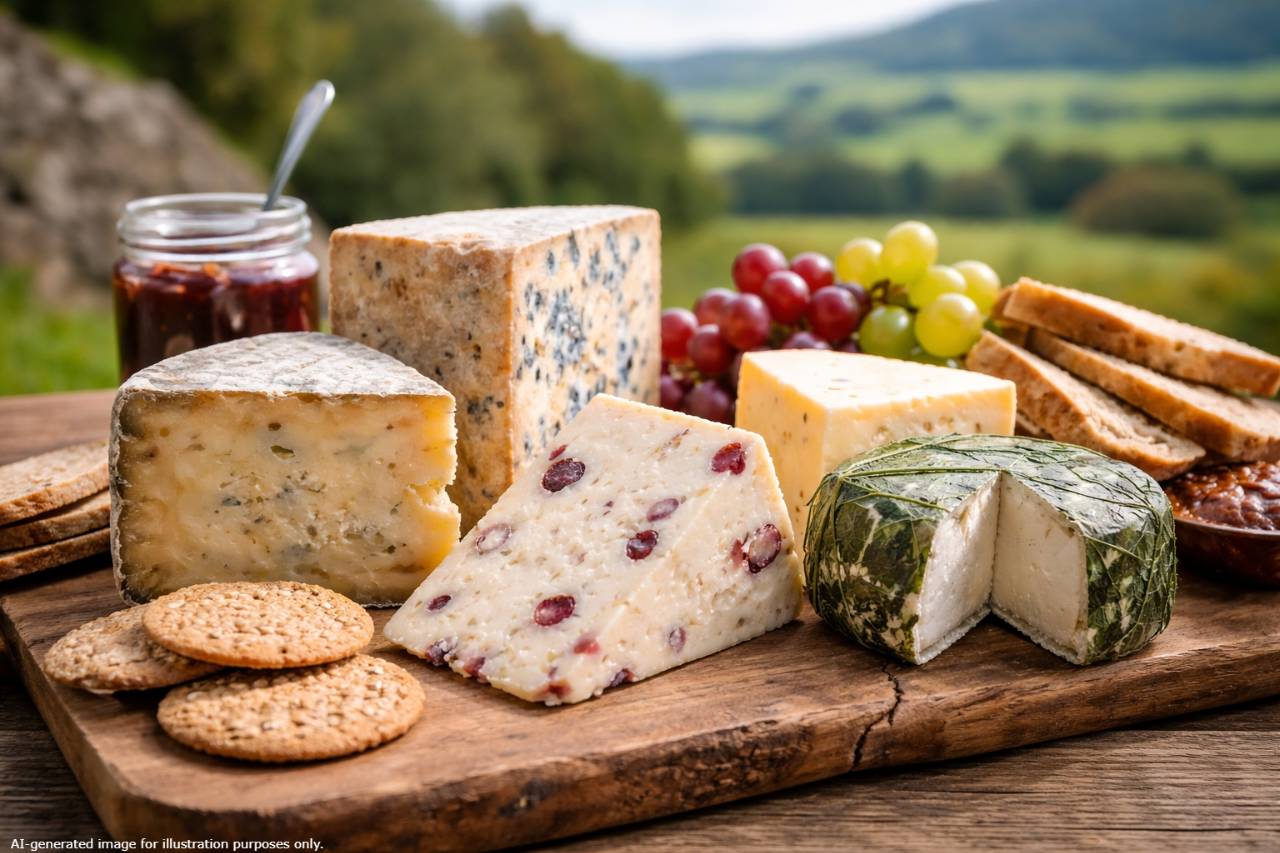

Tasting the Land Through British Cheese: A food and travel guide for Indian travellers visiting Britain
Cheese in Britain is not just food. It is geography you can taste. As you move through the UK, cheese changes character with the land beneath your feet. Grass, rain, wind, soil, and centuries of farming quietly shape what ends up on your plate.
When you travel through Britain, you begin to notice this connection. Each cheese feels grounded in its surroundings. It carries the memory of fields, weather, and people who have worked the same land for generations.
For Indian travellers, this is an interesting shift. Back home, food often changes with spices and techniques. In Britain, food changes with landscape.
Somerset and Cheddar: tasting time, not sharpness
In Somerset, Cheddar tells the clearest story of place. The rolling pasture here is lush and moist, producing milk that is deep and full. Traditional Cheddar was matured in the cool limestone caves of Cheddar Gorge, where natural temperature and humidity shaped the cheese long before refrigeration existed.
When you taste a proper cloth-bound Cheddar, you notice patience rather than intensity. It is firm, slightly crumbly, and long on the palate. If you are visiting from India, look beyond supermarket Cheddar. Visit a farm shop or specialist cheesemonger and ask for West Country Farmhouse Cheddar. This version reflects real Somerset conditions and traditional methods.
Yorkshire and Wensleydale: a cheese for everyday life
Move north to Yorkshire and the mood changes. Wensleydale reflects open valleys and softer landscapes. It is lighter and fresher, with a gentle acidity. Historically made by monks, it became a cheese suited to daily meals rather than ceremony.
It breaks easily, melts reluctantly, and pairs naturally with fruit. This is why you often see it with apples or cranberries. For you as a traveller, Wensleydale feels approachable. It belongs on the table without explanation. It feels similar to how paneer fits into Indian homes. Familiar, useful, and quietly comforting.
Lancashire cheese: shaped by working life
Lancashire introduces a different northern character. Traditional Lancashire cheese is young, crumbly, and milky, with a mild tang rather than sharpness. It developed alongside industrial and working communities that valued nourishment and simplicity.
Sometimes eaten fresh, sometimes aged, it reflects adaptability rather than strict rules. This cheese fits easily into everyday meals, sandwiches, and local dishes. If you are travelling through northern England, this is a cheese you are likely to encounter in pubs and local markets rather than tourist shops.
Cornwall and Cornish Yarg: where land meets sea
In the southwest, Cornwall produces cheeses that feel touched by the sea. The air carries salt and the pasture grows quickly under mild weather. Cornish Yarg, wrapped in nettle leaves, develops a subtle earthiness that mirrors hedgerows and coastal lanes.
The rind forms naturally, guided by local conditions rather than design.
This is not a cheese that can be separated from its environment without losing something essential. For Indian travellers, this is a good reminder that British cheese often relies on natural ageing, not spices or flavouring.
Wales and Caerphilly: practical food with purpose
Wales shows a different relationship between land and milk. Upland grazing produces cheeses with a cleaner, direct flavour. Caerphilly was once a working cheese for miners. It is moist, crumbly, and lightly tangy.
It was designed to be eaten young. Sustaining rather than indulgent. When you eat Caerphilly, you are tasting a cheese made for energy and daily life, not luxury.
Northern Ireland: calm landscapes, balanced cheeses
In Northern Ireland, place expresses itself through quiet richness. Lush fields and steady rain create milk with natural sweetness. Cheeses here often feel rounded and balanced rather than sharp. Traditional cheddars and modern farmhouse blues reflect a farming culture built on care and continuity. The land does not rush, and neither do its cheeses.
Scotland and the southeast: climate shapes flavour
Scotland’s cheeses reflect cooler temperatures and harder ground. Blues from the Highlands feel sharp at first, then soften into balance. Grazing is tougher and seasons are shorter, which gives the milk intensity.
In contrast, the southeast of England tells a different story. Chalky soils influence fresh goat cheeses, giving them a clean, mineral edge. These cheeses feel restrained and precise, much like the landscape itself. Nothing feels overworked.
Why British cheese resists uniformity
As you travel, one thing becomes clear. British cheese does not aim for sameness. Weather changes. Milk shifts. Hands differ. This variation is not a flaw. It is character.
Cheese tied to place resists standardisation because the conditions that create it cannot be copied elsewhere. Eating British cheese becomes an exercise in noticing. You taste, observe, and slowly understand the land through milk.
Where you can experience British cheese as a traveller
You do not need fine dining restaurants to experience good British cheese. Village markets are often the best starting point. Cheese is cut to order and sold by people who understand where it comes from.
Independent cheesemongers on high streets offer carefully chosen selections, often featuring farmhouse cheeses made in small batches. Farm shops outside cities connect cheese directly to the land. Here, cheese sits alongside local bread, butter, and preserves, making the relationship between place and food clear.
Pubs and relaxed restaurants keep cheese part of everyday life. Simple boards with oatcakes or pickles are meant for sharing, not display. Even food halls and traditional department stores allow you to explore regional cheeses in one place. As an Indian traveller on a short trip, this is often the easiest introduction.
A small tip for Indian travellers
If you follow a vegetarian diet, ask about rennet. Many British cheeses use animal rennet, but vegetarian options are increasingly available. A good cheesemonger will explain this clearly. If you plan to take cheese back to India, choose vacuum-packed portions and always check customs rules before flying.
Tasting geography, one bite at a time
Finding good British cheese is about noticing care, locality, and time. Where those values are present, good cheese usually follows.
As you travel through Britain, let cheese guide you. Not loudly, not dramatically, but quietly. The land speaks through milk, and if you pay attention, you begin to understand the country in a new way.