
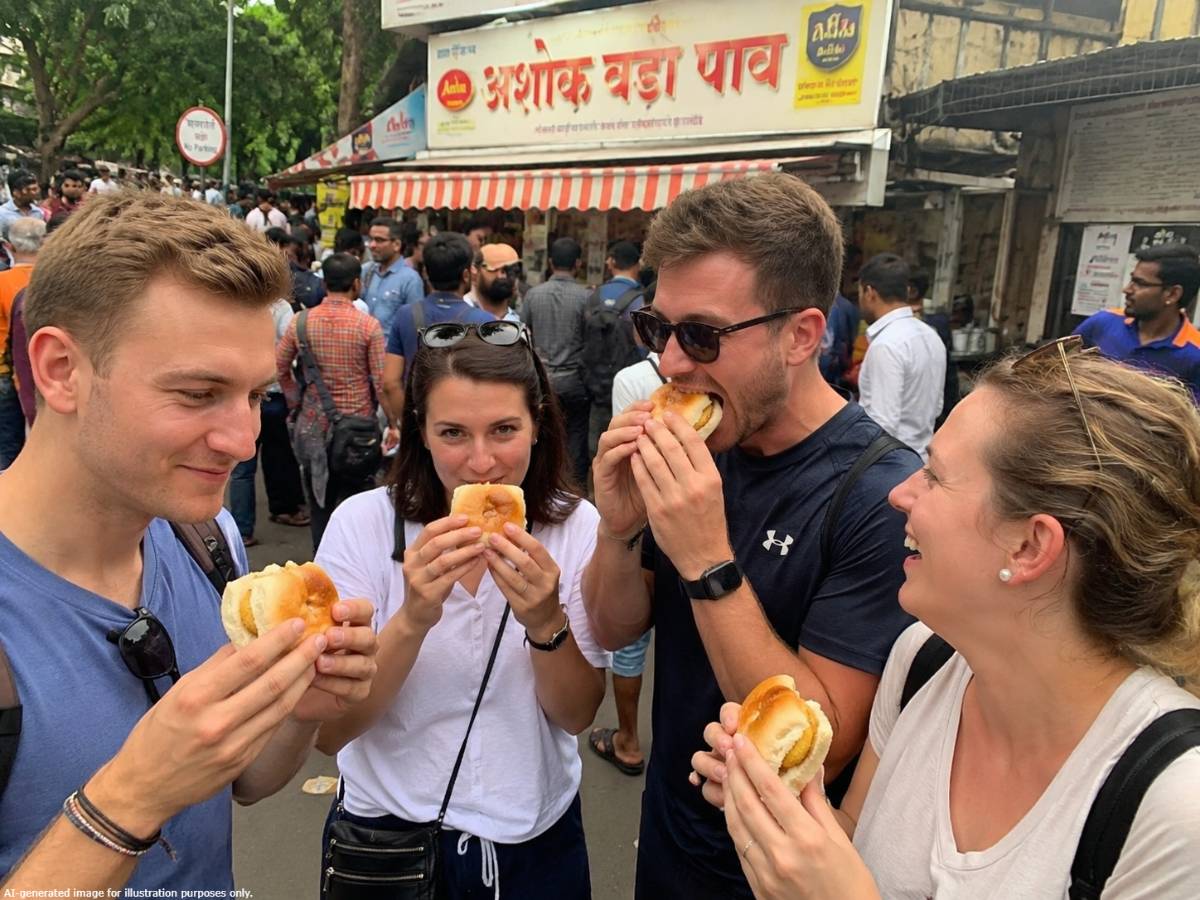

Planning a trip to India and wondering which street food feels both familiar and completely new at the same time? For many UK travellers, the answer is vada pav.
Often called the Indian burger, vada pav is one of Mumbai’s most loved street foods. It is spicy, filling, affordable, and deeply connected to the city’s fast-moving lifestyle.
At first glance, it may look simple. A fried potato patty inside a bread bun. But one bite quickly explains why millions of people eat it every day across India.
What Is Vada Pav? India’s Famous Street Burger Explained
Vada pav is a popular Indian street food from Mumbai, Maharashtra. It consists of:
- A spicy potato fritter called vada
- A soft bread bun called pav
- Dry garlic chutney
- Fried green chilli on the side
The potato filling is coated in gram flour batter and deep fried until golden and crisp. It is then placed inside the pav and served hot.
Because it is handheld, quick to eat, and satisfying, many travellers compare it to a burger. But the flavour profile is completely Indian.
The History Behind Mumbai’s Iconic Vada Pav
Vada pav was created in Mumbai during the 1960s, near Dadar railway station. It is widely associated with a street vendor named Ashok Vaidya, who wanted to create affordable and filling food for textile mill workers and commuters.
At the time, Mumbai was growing rapidly:
- Thousands travelled daily by local trains
- Workers needed cheap fast food
- Meals had to be portable and quick
The solution was simple. Place a spicy potato vada inside bread. That idea became one of India’s most famous street foods. Today, vada pav is deeply linked with Mumbai’s identity and everyday culture.
Why Vada Pav Became Mumbai’s Favourite Fast Food
Long before international fast-food chains arrived, vada pav was already serving Mumbai as:
- Quick takeaway food
- Railway station snack
- Affordable lunch
- Evening comfort food
It became popular among:
- Office workers
- Taxi drivers
- Students
- Factory workers
Even today, people often grab a vada pav during busy train journeys or short tea breaks. For travellers, eating one outside a crowded Mumbai station feels like stepping directly into the rhythm of the city.
Vada Pav vs Burgers: What Makes Them So Different?
UK travellers naturally compare vada pav to burgers because of the bread bun and handheld style. But the similarities end there.
The Filling
Instead of meat, vada pav uses mashed potatoes cooked with:
- Mustard seeds
- Turmeric
- Garlic
- Green chillies
- Curry leaves
- The Coating
The potato mixture is dipped in gram flour batter and fried crisp.
The Chutney
Dry garlic chutney gives the sandwich its signature smoky and spicy flavour.
The Spice
Unlike many burgers, vada pav often comes with a fried green chilli for extra heat.
The result is:
- Crisp outside
- Soft inside
- Spicy and comforting
- Simple yet addictive
Many travellers are surprised by how satisfying a vegetarian burger can be.
Why UK Travellers Love Trying Vada Pav in India
For foreign travellers, vada pav works because it feels approachable.
It is:
- Easy to recognise
- Cheap and filling
- Vegetarian friendly
- Full of flavour
- Perfect for eating on the go
Unlike unfamiliar dishes with many ingredients, vada pav feels easy to understand from the first bite. At the same time, the spices, chutneys and textures make it very different from Western fast food.
The Secret Behind the Flavour of Vada Pav
The magic of vada pav comes from contrast.
Soft Pav Bread
The bread absorbs chutneys and balances the spice.
Spiced Potato Vada
Warm, mildly spicy, and comforting.
Garlic Chutney
Dry garlic chutney adds heat, crunch, and deep flavour.
Fried Green Chilli
Served for those who enjoy extra spice.
Every bite combines softness, crunch, heat, and warmth together.
Why Vada Pav Is More Than Just Street Food
Vada pav is not only a snack. It represents everyday Mumbai life.
It is connected to:
- Local train journeys
- Street corners
- Evening chai breaks
- Fast city life
- Working-class culture
For many Indians, it carries nostalgia and familiarity. For travellers, it becomes a small but memorable part of understanding Mumbai.
Global Recognition and Modern Popularity
Vada pav is now recognised far beyond India.
Interesting facts:
- 23 August is celebrated as World Vada Pav Day
- International food publications often call it the “Indian burger”
- Dedicated vada pav chains now exist across India and abroad
- Mumbai reportedly has more than 20,000 vada pav stalls
Recently, news reports even highlighted how shortages affecting street stalls disrupted daily life in Mumbai, showing how important vada pav remains to the city.
Is Vada Pav Too Spicy for Foreign Travellers?
Not necessarily. Most vada pav is moderately spicy rather than extremely hot. Travellers who enjoy flavourful food usually adapt quickly.
If you are sensitive to spice:
- Avoid eating the fried green chilli
- Pair it with chai or a cold drink
- Start with well-known stalls
The potato filling helps soften the spice level naturally.
Where to Eat Authentic Vada Pav in Mumbai
Travellers usually find the best vada pav:
- Near railway stations
- At roadside stalls
- In local snack shops
- During Mumbai food walks
Some famous places attract long queues, but even small neighbourhood stalls often serve excellent versions. The experience matters as much as the taste.
Why Vada Pav Wins Hearts So Easily
Vada pav succeeds because it does not try to impress with luxury or presentation.
It is:
- Affordable
- Fast
- Honest
- Full of flavour
- Deeply local
That simplicity is exactly what makes travellers remember it. One vada pav on a busy Mumbai street can say more about the city than a fine dining meal ever could.
If you enjoy burgers and want to explore Indian street food without feeling overwhelmed, vada pav is the perfect place to begin. It is warm, spicy, comforting, and unmistakably Mumbai.
Simple food often tells the biggest stories. And vada pav tells the story of Mumbai beautifully.